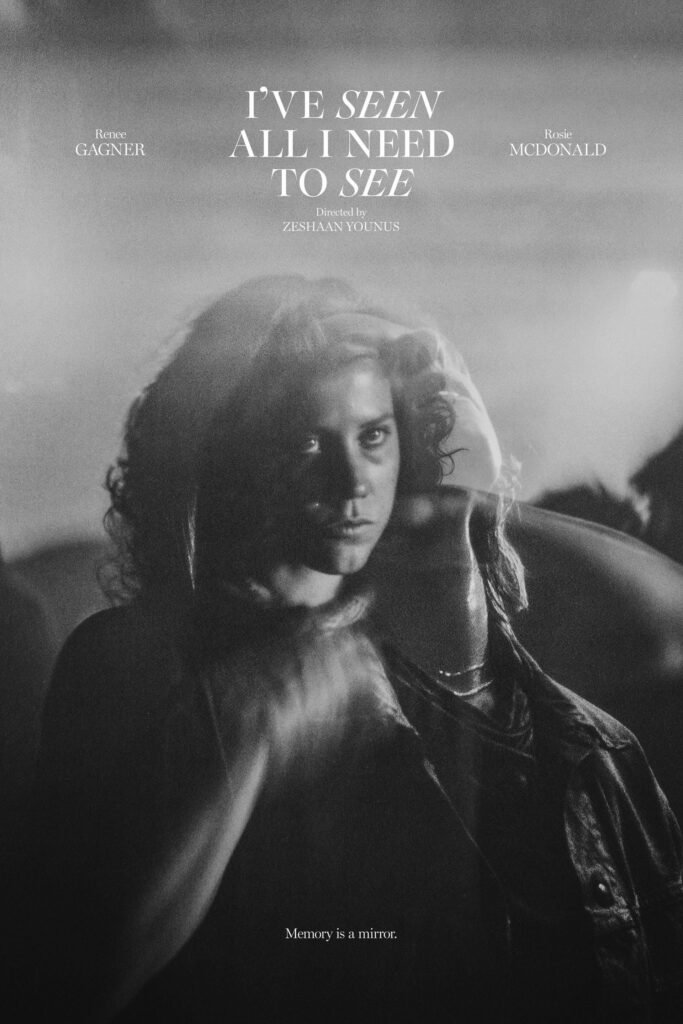
A deeply personal new film from writer-director Zeshaan Younus explores the weight of absence and whether there’s a way back to the light.
There are films that entertain, and then there are films that stay with you in the dark after the credits roll. Zeeshan’s latest feature, a raw, unflinching portrait of grief, belongs firmly in the second category. Screened during the Glasgow Film Festival, the film left a strong impression, with one interviewer describing it as very, very powerful.
At its heart is Parker, played by Renee Gagner, a woman navigating the suffocating maze of loss — not solely from death, but from absence. “The ethos of the film,” Zeeshan explains, “is that there’s people in your life that mean a lot to you, and their absence is almost as significant… as their presence.” This is a filmmaker excavating something deeply personal: a pivotal relationship he no longer has, and the way that void has quietly redirected the course of his life.
“Somebody’s void in your life really changes the way you navigate your own personal trajectory.” — Zeeshan
Central to that power is Renee’s performance. Zeeshan recalls watching her audition tape and knowing within ten seconds. “She had this capability of really physicalising grief… she was in a slipstream.” Renee herself was, at the time of casting, emerging from several years of personal grief. “It was fresh,” she says simply.
“The first time I saw the finished film… I cried at the end.” — Renee
The film is built around long, sustained takes — a deliberate choice that forces the audience to sit inside Parker’s experience rather than escape it. One sequence in particular, where Parker lies still as a man stands in her room, is described by the interviewer as more frightening than many conventional horror films. “She doesn’t run,” Renee explains. “She’s surrendered… being confronted with the reality of her sister’s situation.”
Yet the film ends not in despair but in something approaching release. That final moment — Parker glimpsing a faint light — was intentional. “I wanted people to feel like we got through that together,” Zeeshan says. Executive producer Natasha, who previously worked with him on The Buildout, reflects on the film’s emotional core: grief never fully disappears, but it changes. “You feel like you’re not going to get out… and then you do. That’s grief.”
I’ve Seen All I Need To See asks you to feel something real. And when it’s over, you may find yourself thinking about the people whose absence has quietly shaped your life, whether you realised it or not.